Caffenol
What’s up party people, this is my first “blog” post. I’m using quotes because I don’t really want to consider this a blog, I’m not planning on going on long winded musings or to sell you the latest self help book with Chat GPT ghostwriting. No, the goal of this thing is to have some place I can point to out in the virtual world and say, yeah that’s what I’m currently working on. But also this is my website so maybe that will change in the future, I don’t know and I don’t care, buckle in.
I’ve been shooting film for a little while now and I’ve gotten myself really involved with the process of it all, so like the engineer I am, I wanted to get more involved and what better way than to create your own developer! Now caffenol is not a new process, it’s been around since 1995 after being discovered as part of an alternative developing experiment at RIT, however it is new to me so I spent a bit of time researching tried and trued proven recipes that I could find online. There were a few that repeated the same numbers and pointed to the same sources of information, so eventually everything trickled down into a few important posts and blogs to read. I will provide the links to these because it truly was the only reason I got such solid results.
Let’s talk a little about science. Sorry, not sorry. Film is made up of layers, like an onion (thanks shrek). The base of photographic film is usually made of a clear flexible plastic, polyester or cellulose acetate, and upon that base, the film emulsion is sprayed on using a very complicated process involving rolling drums and sprayers and fluid dynamics and what not. The film emulsion is what we’re interested in, it’s primarily made up of silver halide (specifically silver bromide) crystals suspended inside of a gelatin material (rip horsies). There are also anti-static, anti-halation, and anti-scratch layers on film but those aren’t as important and are mostly supplementary to the photographic film experience.
Those silver halide crystals are what make up film grain, but also not exactly. Silver bromide is made up of a positively charged silver atom and a negatively charged, and much larger, bromine atom. The opposite polarities attract the two atoms together to form a bond. When exposed to light, these crystals are hit with the photons that make up the light spectrum, and the much larger bromine atom takes the brunt of that abuse, eventually losing its extra electron that gave it its negative charge. For some reasons I don’t understand, those freed electrons remain in the crystal of the bromide they were freed from, but by instead latching onto some random impurity in that crystal. This creates a pocket of negative charge, based around where the light was hitting, the more the light, the more electrons are freed and greater the pocket of negative charge. This becomes what is called a sub-latent image, the possibility of that image existing is there, but the chemical process to make that latent image is not yet complete. That pocket of electrons is important, because it will eventually attract the still positively charged silver atoms of the silver bromide molecules from where they once came. Those silver atoms break away from the neutral charged bromine atom, attracted to the pocket of electrons to become a gathering of metallic silver atoms. The size and density of that pocket of metallic silver is directly correlated to the amount of light it received because that controls how many electrons were freed from the bromide atoms. This is what’s called a latent image, now that image still exists but it’s buried in a sea of unexposed silver bromide crystals that obscure the image. This is why developing is necessary to actually see an image on photographic film.
Developing is the secondary chemical process in film that creates a developed latent image. The developer acts upon silver bromide crystals that have been exposed to light by using the seed of metallic silver contained in them to trigger the chemical alteration that makes the full crystal opaque and no longer light sensitive. Now this latent image is great, but again, still lost in a sea of underexposed silver halide crystals. That’s where the fixer comes in, it chemically alters the silver bromide to become water soluble allowing it to wash away, meanwhile the metallic silver grains are left undisturbed. The density of the metallic silver grains is what determines the opacity on the negatives, which when inverted to a positive turns the darker sections brighter. More light, equals denser metallic silver grains, equals darker negative, and hence brighter positive. Isn’t that so cool!! I said I wasn’t going to be long winded in these but I already broke that rule, lovely.
That brings us to the topic of this post, caffenol. That is the colloquial name of the coffee based developer that along with ascorbic acid and washing soda, makes a photoreactive developer. The caffeic acid and the ascorbic acid (basically just pure vitamin C) are both phenolic phytochemicals and are responsible for the development of photographic film. The washing soda has a specific function too but I don’t know what exactly it does. The last of the recipe is potassium bromide, which also serves a purpose to defog the developed film but I’m not sure how it does that.
So now, here is the recipe from my first attempt, developing Kentmere 400 shot at 800 ISO:
40 g of instant coffee (I used Nestle instant coffee, taster’s choice classic)
54 g washing soda (this one has to be confirmed water-free, if you’re not sure, bake it in a shallow dish in the oven at 250 degrees F for 20-30 minutes, weigh it before and after to see if the washing soda lost any weight, which would be indicative of water that evaporated out. Once there is no more loss of weight, then it means all the water has evaporated, this is very important because otherwise a water-laden washing soda will dampen it’s affect and 54 g won’t be enough. It’s possible to just add more washing soda into the recipe, but I prefer the waterless method.) .
16 g ascorbic acid (you can buy the powdered version online or crush a bunch of vitamin C pills, which is what I did, keep in mind that the pills have binders in them that will not dissolve in water and could also affect the effectiveness of the ascorbic acid.)
1 g potassium bromide (bought this online)
And here is the process:
instant coffee in 200 mL of boiling water, mix thoroughly and let cool
washing soda in 200 mL of cold distilled water, mix thoroughly
combine and bring the mixture up to 800-900 mL
add the potassium bromide and mix thoroughly
add the ascorbic acid and mix thoroughly, add more distilled water until the entire mixture is up to 1000 mL
Development process:
The total time for development was 20 minutes (invert 15 times for the first minute, then 5 inversions every minute after), a thorough water wash to stop development after (I don't use a stop bath anymore, just washing the film really well is more than enough), then 5 minutes for the fixer (same inversion cycles). After pouring out the fixer, thoroughly wash the film in running water, then do one last water wash using distilled water and a couple drops of Photoflo to ensure your film dries without water spots.
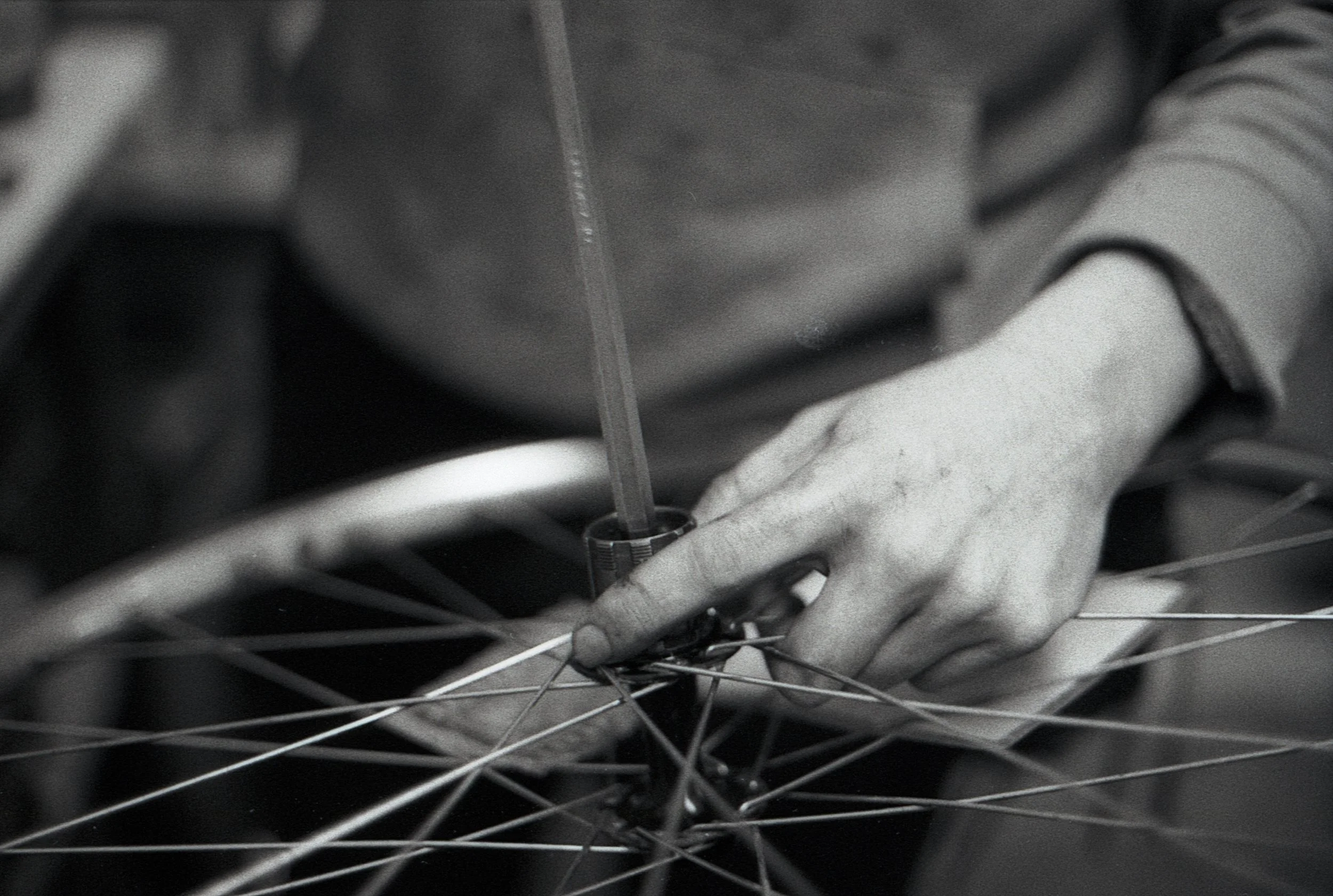
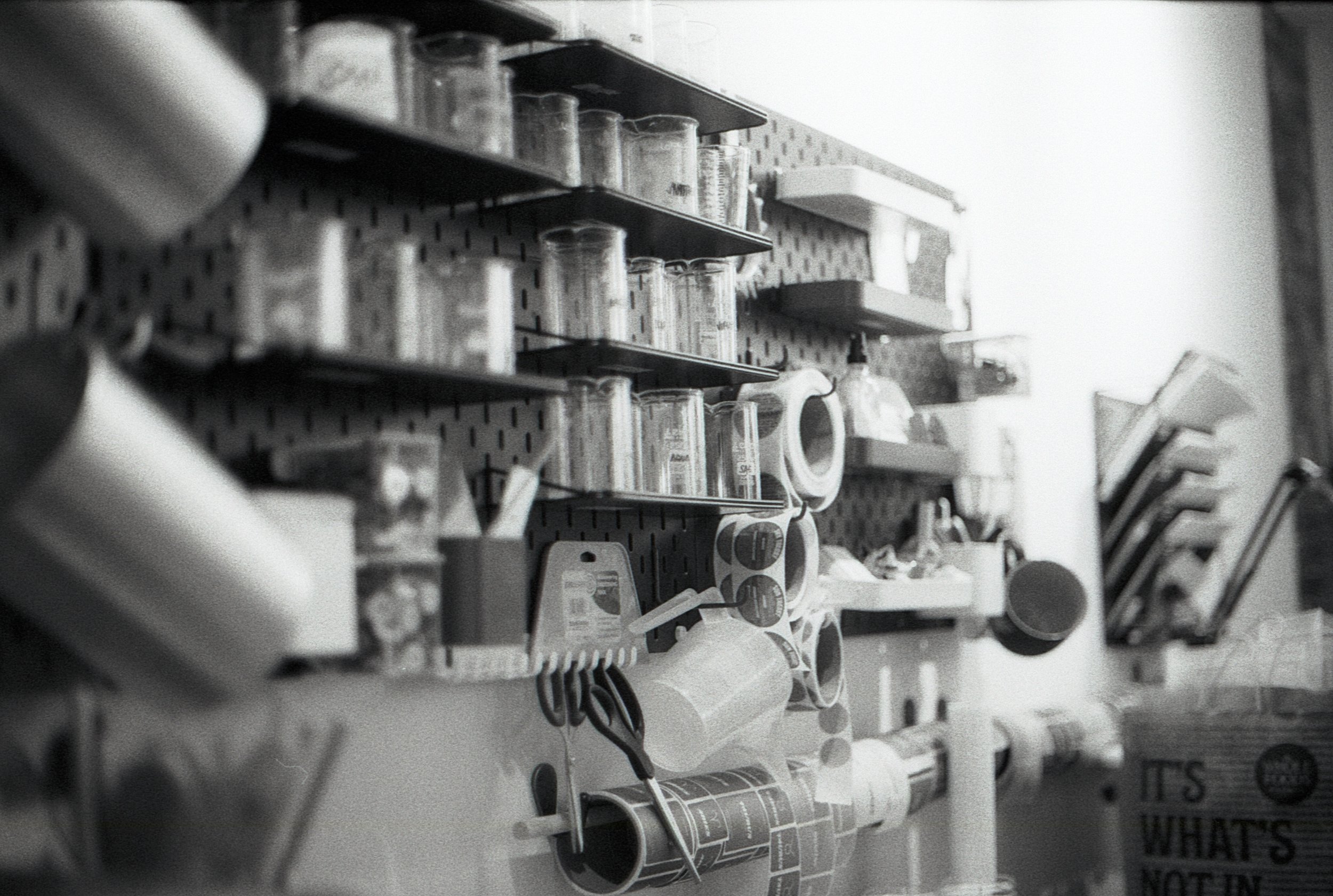
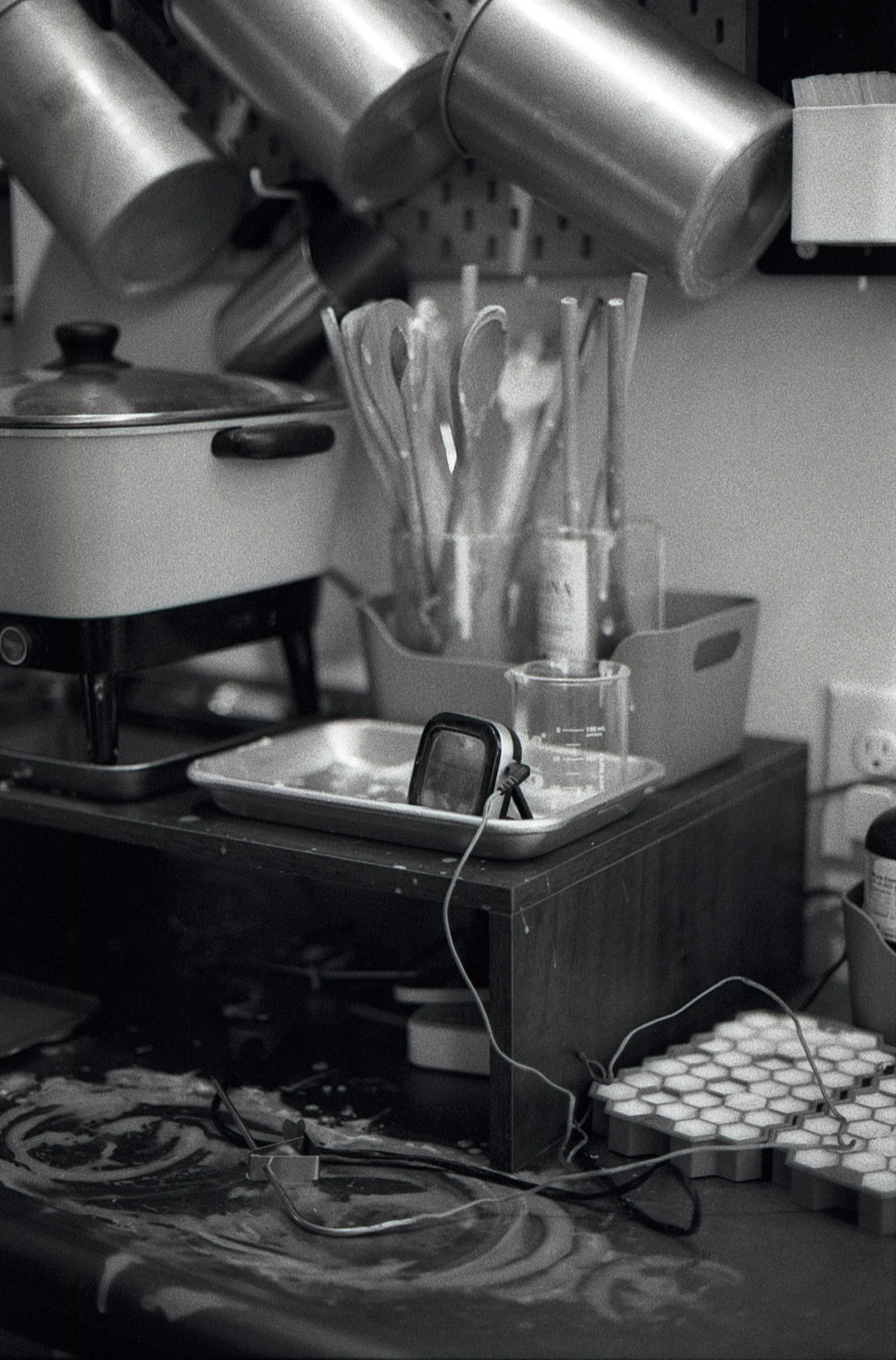
That’s it! I’ll post some example pictures below, I shot a variety of things and the developer has worked incredibly. For standard grain black and white film, this may become my go-to developer because of how well caffenol functions, the cost benefits, and because it’s a plant based developer!
Thanks for reading, sorry it took so long to get to the point.